PUMA x A$AP Rocky Suede Arrives With 1994 Archive Reimagining
A$AP Rocky has reimagined the PUMA Suede through the lens of 1994 New York, the year that birthed the original silhouette and a cultural moment the artist views as pivotal to the city's identity. The collaboration marks another chapter in Rocky's tenure as PUMA's Creative Director, blending archival authenticity with contemporary personalization.
 By Marcus Chen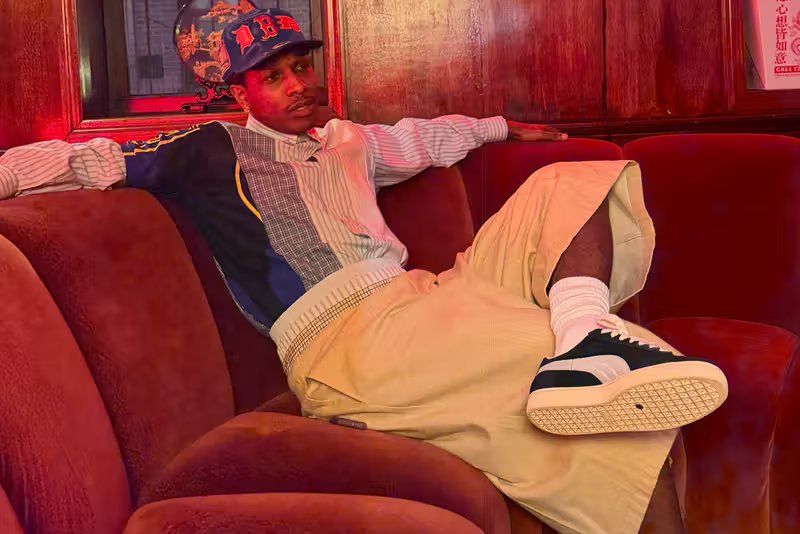
A Hometown Celebration Rooted in Nostalgia
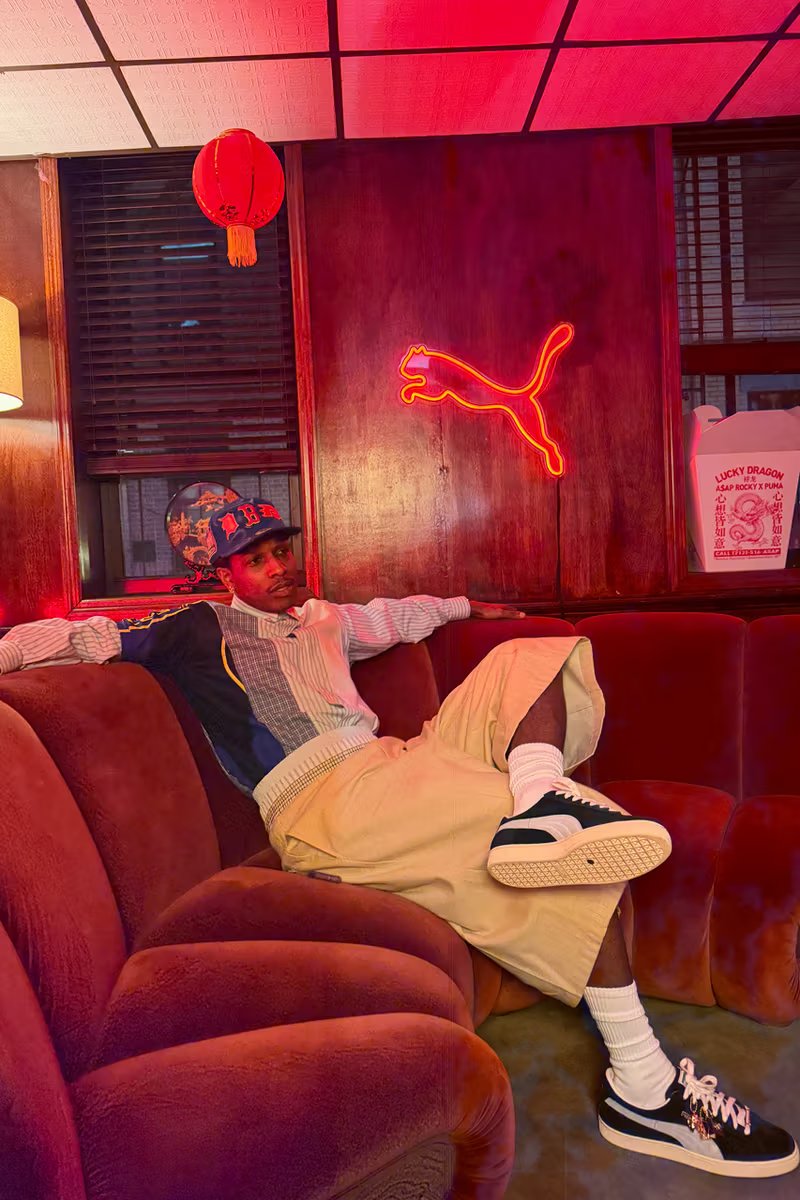
A$AP Rocky christened his latest PUMA Suede design where it mattered most—Pell Street in Manhattan's Chinatown, the neighborhood that shaped him. The Lucky Dragon, an intimate dim sum establishment, became the venue for a pop-up experience that prefaced the global launch, with the afternoon open to the public and evening reserved for press. The space was transformed into a distinctly Rocky universe rendered in deep red tones: shoes nestled in dim sum boxes, custom fortune cookies printed with the collaboration's branding, and a charms station disguised as a noodle bar, where guests collected charms delivered in takeout containers.
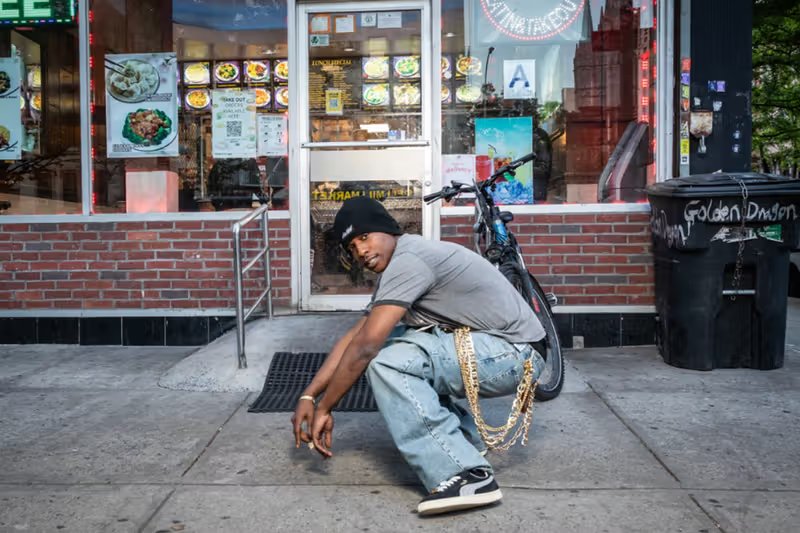
The staging was deliberate. Rocky used the evening to explain the conceptual spine of the project—the idea of adorning sneakers with charms as a form of self-expression, a practice he traces back to mid-nineties skate and street culture when New York felt like an genuinely inclusive creative mixing pot.
Design Details: Archive Meets Intentional Revision
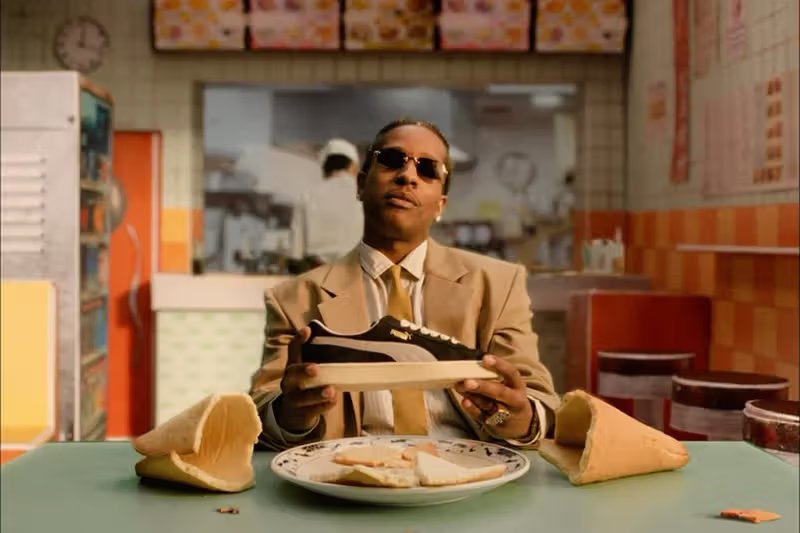
The PUMA Suede sits at the intersection of Rocky's vision and the brand's design archive. For this iteration, he opted to pull directly from the model's 1994 genesis, introducing a full-retro PUMA logo positioned on the quarter panel—a detail absent from any previous Suede interpretation. Additional retro markers include a raw-edge padded tongue, vintage woven label construction, and a slimmer tooling that recalls the original's proportions.
A gold PUMA lace keeper tops the design, while the charms concept—positioned as customization rather than fixed embellishment—allows wearers to layer personal identity onto an already historically rooted silhouette.
The Cultural Moment Behind the Design
Rocky's creative direction at PUMA, now spanning over three years, has consistently mined the brand's back catalog for silhouettes worth revisiting. This Suede project carries particular weight because 1994 represented something specific to his understanding of New York—a year when skate, fashion, hip-hop, and visual art converged without hierarchy or gatekeeping.
In conversation at the launch, Rocky referenced the era's musical landscape as foundational: the Native Tongues collective's work through De La Soul and A Tribe Called Quest, Wu-Tang Clan's synthesis of martial arts cinema and Black urban culture, and the underground output of groups like Bone Thugs-n-Harmony and Three 6 Mafia. He cited the 1994 film Kids (shot that year, released in 1995) and the emergence of brands like Zoo York and Supreme as visual markers of a moment when New York's street cultures felt genuinely integrated across race and ethnicity.

The Suede, in his view, carries that energy. These were the shoes people wore while skating and moving through those spaces. By returning to the 1994 iteration and adding a layer of personalization through charms, Rocky positioned the shoe as both document and invitation—a chance for contemporary wearers to participate in the same aesthetic and cultural mixing that defined that specific New York moment.
Puma under retail
Browse Puma items priced below retail on StockX
Release Info
The PUMA x A$AP Rocky Suede launched globally following the Manhattan event. The collaboration emphasizes archival fidelity while introducing Rocky's personal customization philosophy, making it relevant both as a heritage revival and a statement on individual expression within streetwear culture.
FAQs
What makes this PUMA Suede different from previous versions?
This iteration features a full-retro PUMA logo on the quarter panel, a design detail not previously used on any other Suede release. It also incorporates a raw-edge padded tongue, retro woven label, slimmer tooling, and a gold lace keeper, all drawn from the 1994 original.
Why did A$AP Rocky choose 1994 as the inspiration?
Rocky views 1994 as a pivotal year for New York's cultural convergence—when skate, hip-hop, and street fashion intersected across ethnic and cultural lines. The year saw landmark releases in music (Wu-Tang Clan, A Tribe Called Quest, Three 6 Mafia) and visual culture (Kids, Zoo York, Supreme), making it a defining moment for the city's creative identity.
Where can I buy the PUMA x A$AP Rocky Suede?
The shoe launched globally following the Manhattan event. Availability through PUMA and authorized retailers; specific retail pricing and stockist details were not confirmed in the launch announcement.
Release Info
Availability: Global launch (post-event)
Retail Price: Not confirmed
Key Details: Full-retro PUMA logo, raw-edge padded tongue, retro woven label, gold lace keeper, slimmer 1994-era tooling
Retailers: PUMA and authorized partners